Clay, Cloth or Paper: What Each Material Lets a Small Project Do
Clay, cloth or paper: choose a material for the shape, joins and storage your small creative project needs, before a promising idea meets its limits.
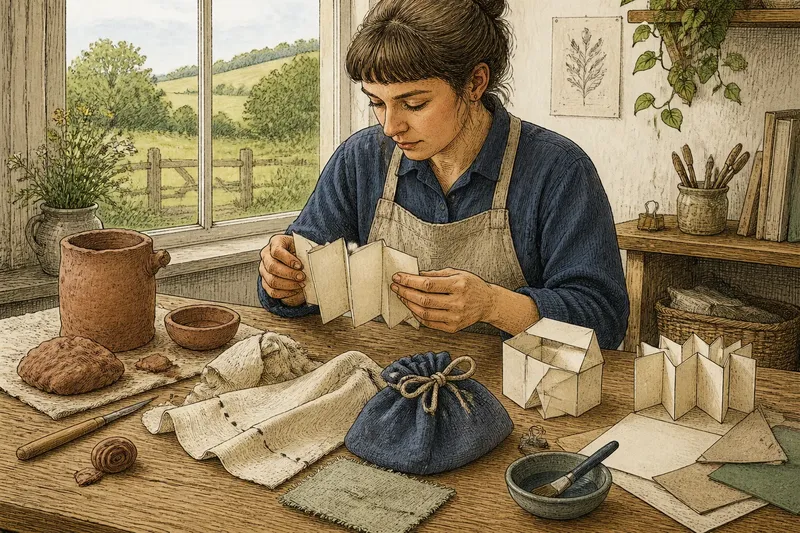
Which material will let your small creative project take the shape you have in mind without turning every next move into a workaround? Clay, cloth or paper each make some actions straightforward and others awkward. The choice is less about which material looks most appealing on the table than about what the project must do: hold a form, bend, join, travel or wait between sessions.
Small projects often expose a material’s habits quickly. A paper form can buckle under damp glue; a cloth object can sag when its seams carry too much; clay can lose a delicate projection while it is being moved. These are not signs of poor judgement. They are useful clues about where the material’s limits meet the project’s demands.
Choose for the form, not the material’s reputation
Start by describing the intended object with verbs. Should it stand, fold, drape, wrap, stack, carry a message or change shape? Those verbs offer a more reliable starting point than a preference for “natural”, “traditional” or “expressive” materials, terms that sound decisive but do not help much when a piece refuses to stay upright.
Clay is suited to forms built by pressing, pinching, rolling or joining soft masses. It can hold a rounded or sculpted shape without a frame, and its surface can be altered before it dries. In return, it asks for care during drying and, if the finished work is intended to be hard and durable, access to appropriate firing. Air-drying clays have different properties from kiln-fired clay; they should not be treated as interchangeable simply because both begin as pliable material.
Cloth is useful where flexibility is part of the idea. It can gather, hang, wrap, fold and combine with stitching or ties. The weave, thickness and stretch affect what it can support: a loose fabric may drape attractively but distort under a heavy attachment, while a firm fabric can resist the soft folds a design needs.
Paper offers a direct route to flat, folded, cut and layered forms. It is easy to mark, rearrange and carry, and a small change can be made without rebuilding a whole object. It is less forgiving of repeated bending, heavy wet adhesive and unsupported weight. Paper weight, surface and fibre direction matter, so two sheets that look similar can behave quite differently.
When a form collapses or changes shape
A shape that will not stay as planned usually points to a mismatch between the material’s natural behaviour and the way it is being asked to work. Before adding more material or more elaborate support, identify whether the problem is softness, weight, tension or moisture.
Clay forms can slump when they are too wet, too thick in one area or carrying a projection that has little support. A piece may also crack if one section dries much faster than another. Workable clay can be kept covered between sessions, and a delicate part can be simplified or supported while the form firms up. If a project needs a thin, unsupported reach, consider whether a more robust construction or another material would make the intended shape less fragile.
Cloth can stretch or sag when the fabric carries weight along a direction it cannot resist, or when a seam is asked to hold more than the surrounding material. Try reducing the load, spreading it across a broader area or adding a support layer where the construction allows. If the aim is a soft hanging form, some sag may be a feature rather than a fault; decide whether the changing outline suits the work before trying to eliminate it.
Paper tends to buckle when moisture is concentrated on one side or when adhesive is applied heavily. A lighter touch with glue, a less absorbent adhesive or a dry joining method may help. If a sheet has already warped, pressing it beneath clean, flat boards once it is fully dry can sometimes reduce the curl, though it will not restore every surface or fold.
When the joins refuse to hold
Each material has a different idea of what counts as a useful join. Clay joins depend on the pieces being compatible in moisture and firmly integrated. Cloth relies on stitching, knots, ties or suitable adhesive. Paper can be joined by tabs, folds, tape, clips or glue. A join that works for one material may be clumsy or weak in another.
With clay, a joined section may separate if the surfaces are too dry, too smooth or poorly blended. Pressing the pieces together without working the seam can leave a visible boundary that later opens. Keep joined areas similar in softness and give the seam attention as part of the form, rather than treating it as an invisible administrative detail.
With cloth, a seam can pucker when the fabric is pulled unevenly, or tear when the thread concentrates force on a small area. Use a seam or tie suited to the fabric’s weight and movement. For a project that will be handled, make the join part of the design where possible: a visible row of stitching can be easier to inspect and repair than a hidden glued edge.
Paper joins often fail because the contact area is too small, the surfaces are dusty, or the fold is carrying more strain than the adhesive can manage. Tabs and overlapping flaps spread the connection across a wider area. For a temporary model, removable tape or clips may be more useful than a permanent bond, especially while the shape is still changing.
When the material behaves differently than expected
Unexpected behaviour often begins with a material property that was hard to see at first. Paper has grain and differing absorbency; cloth has weave, stretch and fraying edges; clay changes as moisture leaves it. A modest trial with offcuts or a small sample can reveal these traits before they become part of the finished work.
For paper, bend a scrap in both directions and notice whether one fold stays cleaner. Test a little of the intended adhesive on another scrap and let it dry before using it on a visible area. For cloth, tug gently along and across the weave, then check whether the edge frays when cut. For clay, make a small coil or slab from the same batch and observe whether it holds its shape as it firms.
These checks are not a demand for a miniature rehearsal of the whole project. They are a way to answer a narrow question: will this paper fold cleanly, will this fabric support the attachment, will this clay keep the profile? Testing every possible combination is not worth the effort. Test the point most likely to affect the form, then get on with the work.
Say you want to make a small, fold-out display for a local gathering, with handwritten notes that can be changed later. You begin with thick paper, but the wet glue makes the panels curl and the notes become difficult to replace. You switch to folded card for the structure and use removable clips for the notes; the expected result is a display that opens reliably and allows the written pieces to be rearranged without rebuilding the panels.
When storage interrupts the work
Storage is part of the material choice because a small project may need to wait between sessions or travel from a kitchen table to a shared room. Clay can dry while it is unfinished, cloth can crease or gather dust, and paper can bend at the corners or absorb damp. The right storage method depends on whether the piece is still being made or is ready to keep.
Unfinished clay generally needs protection from drying if work is to continue, but it should not be sealed or left damp without regard to the clay and its condition. Keep scraps and a partly made form separate where accidental pressure could distort it. For finished work, allow for fragility and avoid stacking pieces that can chip or flatten one another.
Cloth is easy to fold, but folds can become part of the object whether intended or not. Roll a large or delicate piece around a clean tube if a crease would be troublesome, or fold it along lines that suit the design. Keep small textile components together in a labelled bag or box so that ties, patches and fasteners do not become an archaeological puzzle at the next session.
Paper stores flat in a folder or between clean boards, with fragile edges protected from rubbing. Three-dimensional paper work needs enough room not to be compressed; a box can protect it, but an overfilled box merely replaces one problem with a lid. If the work is designed to travel flat and assemble later, that may be a better use of paper than insisting it remain permanently three-dimensional.
Which material suits the project you have?
Use the following questions to choose by the work’s intended behaviour:
- Must it hold a rounded or sculpted shape? Clay may suit a solid form that can be built and refined by hand, provided its drying and finishing needs fit the project.
- Must it fold, drape or wrap? Cloth is a natural candidate when movement and softness matter, with the weave and weight chosen to suit the load.
- Must it stay light, flat or easy to rearrange? Paper is often the simpler choice for panels, folded structures, layered surfaces and replaceable parts.
- Will people handle it or take it apart? Consider repairable joins: stitching for cloth, tabs or clips for paper, and carefully blended seams for clay.
- Will the project pause between sessions? Choose a material you can protect and store without changing the work in ways you do not want.
- Does the idea depend on a precise finish? Make a small sample first, particularly where adhesive, moisture, firing or fabric stretch will affect the surface.
Product labels, maker instructions and any local requirements relevant to the intended use should guide decisions about materials and finishing. In particular, do not assume that a clay sold for modelling is suitable for food contact, or that every adhesive is appropriate for every surface.
What should you try when the first choice fails?
Can I combine clay, cloth and paper in one project?
Yes, if each material has a clear role and the joins account for their different movement and weight. A paper tag attached to a cloth panel is usually simpler than asking a damp clay form to carry a fabric piece through drying.
Can I substitute air-drying clay for kiln-fired clay?
Not automatically. The two behave and finish differently, so check the product information and choose according to whether the piece needs a particular strength, surface or intended use.
What if the project needs to be portable?
Think about how it will be packed, not only how it looks when assembled. A flat paper design, a foldable textile piece or a clay object made in separate protected parts may suit travel better than a single delicate form.
How do I choose when I cannot decide?
Make the smallest useful sample that tests the main action: a fold, a seam, a join or a shaped wall. The material that lets that action happen with the least unwanted repair is often the more practical choice.
Clay, cloth or paper is not a ranking of seriousness or skill. It is a decision about what kind of form the project asks to hold, how its parts will meet and what should happen when the work is put away. Choose the material that makes the central action possible; let the rest of the design adapt around it.